Thankful to have some good news in these darker days.
Saturday, 28 September 2024
Genetics testing
I got the results back from my genetic testing this week and thankfully I don’t have any of the dozen or so genes they tested for!!

Emergency room and hospital visit
Well, coming off reaching 50 percent done chemo, I started to feel a bit off Friday night. My left ear started to hurt and swell.
I woke up Saturday and it was getting worse and I also took my temp to realize I had a fever.
Jeff took me to the ER that morning. I ended up in the hospital for two nights as they tried to get my fever down and pumped me with antibiotics for my infection, which they said was cellulitis.
It was a pretty horrible experience not just because I was unwell and worried for my own health but Ontario hospitals aren’t in the best shape. It was crowded, noisy, felt dirty and was overall traumatic honestly!
I can’t even talk about some things I saw and experienced right now.
It’s also shaken my confidence a bit. I have three more cycles to go and I really hope I can stay healthy and on track.
50 percent done chemo!!
On sept 19 I completed chemo #3 and I’m now 50 percent done ✅!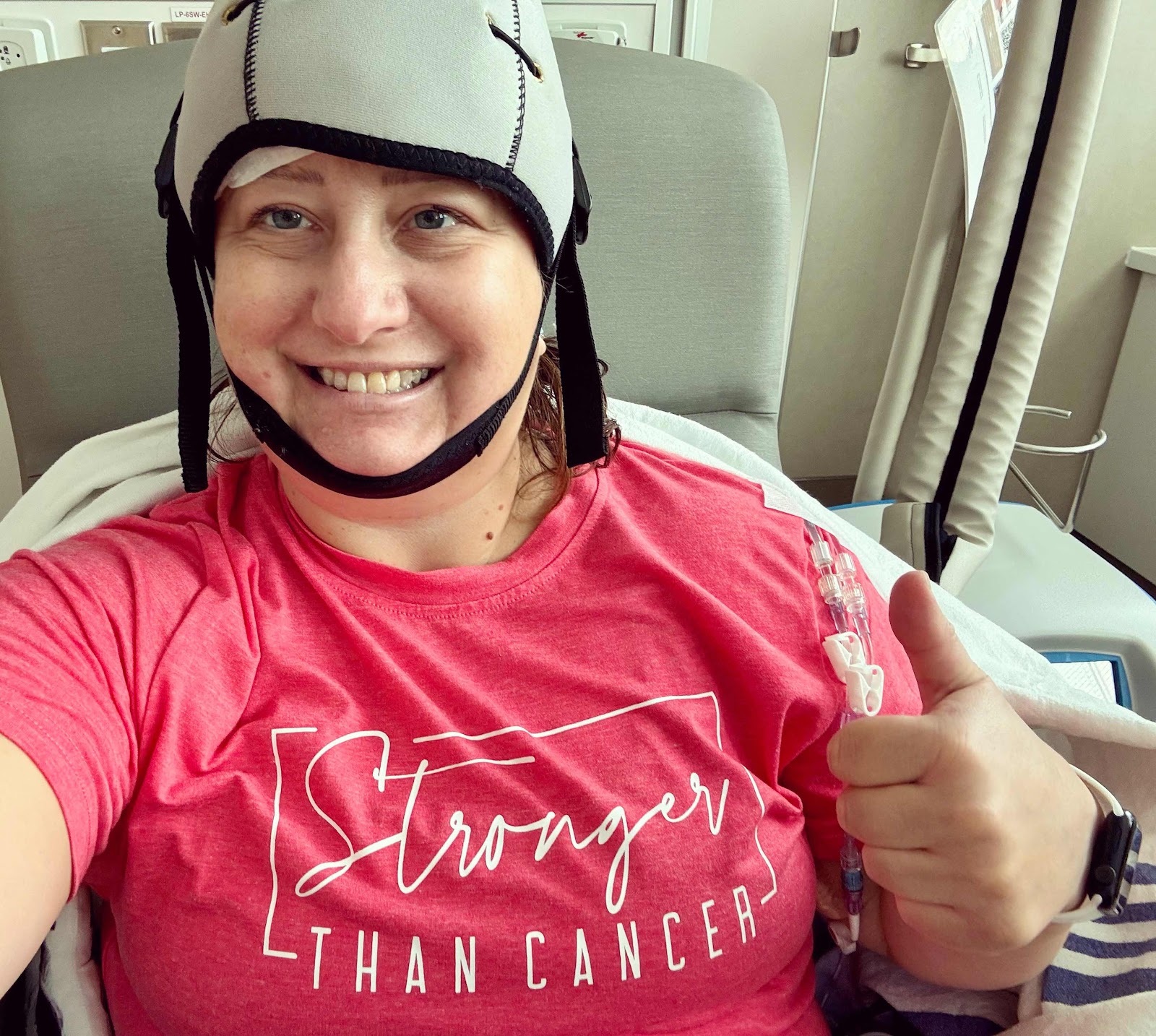
It feels like a big milestone and I’m grateful to achieve it.
Tuesday, 17 September 2024
Hot peppers and radical acceptance
I recently signed up for these emails that have stories and journal prompts to support my healing process. This one really resonated.
|


 |
Hi friend,
A few weeks ago, at a medical appointment, I was discussing my mindset around resuming chemo with one of my favorite nurses—one who cared for me when I was diagnosed with leukemia at twenty-two, then again two years ago, and now a third time—and she said, “You seem weirdly calm.”
I replied, “I feel weirdly calm.” And it’s true. At first, I thought I was in shock or maybe even denial—and sure, there’s probably a little of both. But mainly, I think I feel calm because I’ve accepted my circumstances. It’s taken me a long time to get here. Over the last thirteen years, I’ve raged against the realities and limitations of illness. I’ve stewed in self-pity. I’ve fallen into the comparison trap, envying others who don’t have to endlessly deal with such health conundrums. I’ve numbed myself to my reality, binge-watching bad TV and indulging other means of escape. But the fact is, that illness and its imprints have been a constant specter in my adult life, and as much as I may want to, I can’t look away. Illness and its attendant complications—everything from doctor’s appointments to uncertainties about the future—are simply here. It is what it is, and no amount of avoidance gymnastics will change it.
That’s not to say I don’t feel fear—of course, I do. But strangely, the anticipation of pain can be far scarier than just being in it, actually confronting it. After my first transplant, in the years when I was cancer-free, I felt hijacked by the prospect of a recurrence and afraid that I wouldn’t be able to handle it. When it actually happened, I faced it. Knowing that, I have been trying to practice a kind of radical acceptance of whatever comes up, responding with whatever the situation calls for.
Take last weekend, for example. On Saturday, I had to go in for my last infusion of my second round of chemo. The side effects compound day-to-day, and afterward I felt awful, and I knew I’d be spending the day in bed. It had been a rainy morning, but on my way home, the sky began to clear, and I beheld a spectacular rainbow. For a moment, I glimpsed a sense of wonder. When I got to my room, I said to myself, “If I have to be in bed all day, so be it. What can I do to make this a little less miserable?” I took some anti-nausea meds and got a big glass of water. I put on my favorite face oil, wrapped myself a heating pad, gathered my pups around me, and queued up some favorite old movies to watch. Did I still feel awful? Yes. But instead of fighting it, or lamenting all of the things I wouldn’t be able to accomplish that day, I accepted it. And it turned out that staying in bed all day felt almost luxurious.
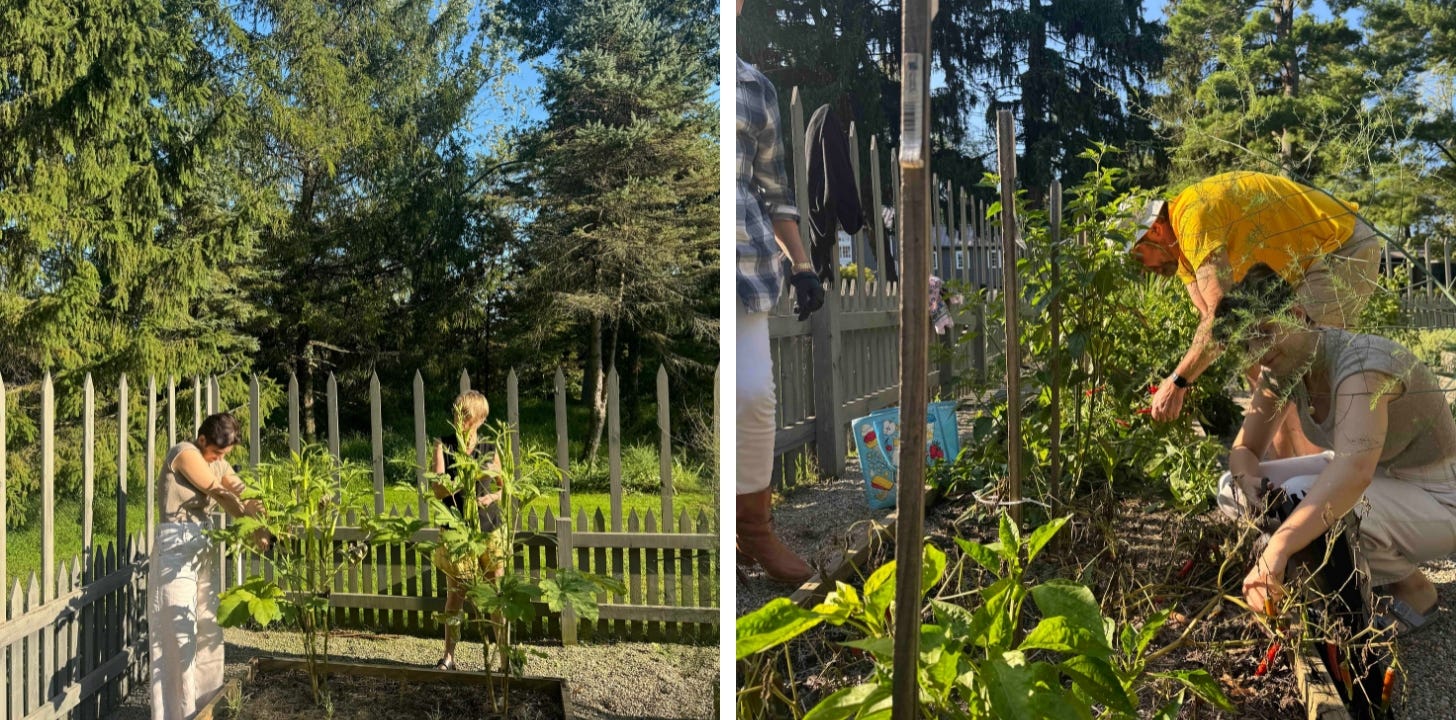
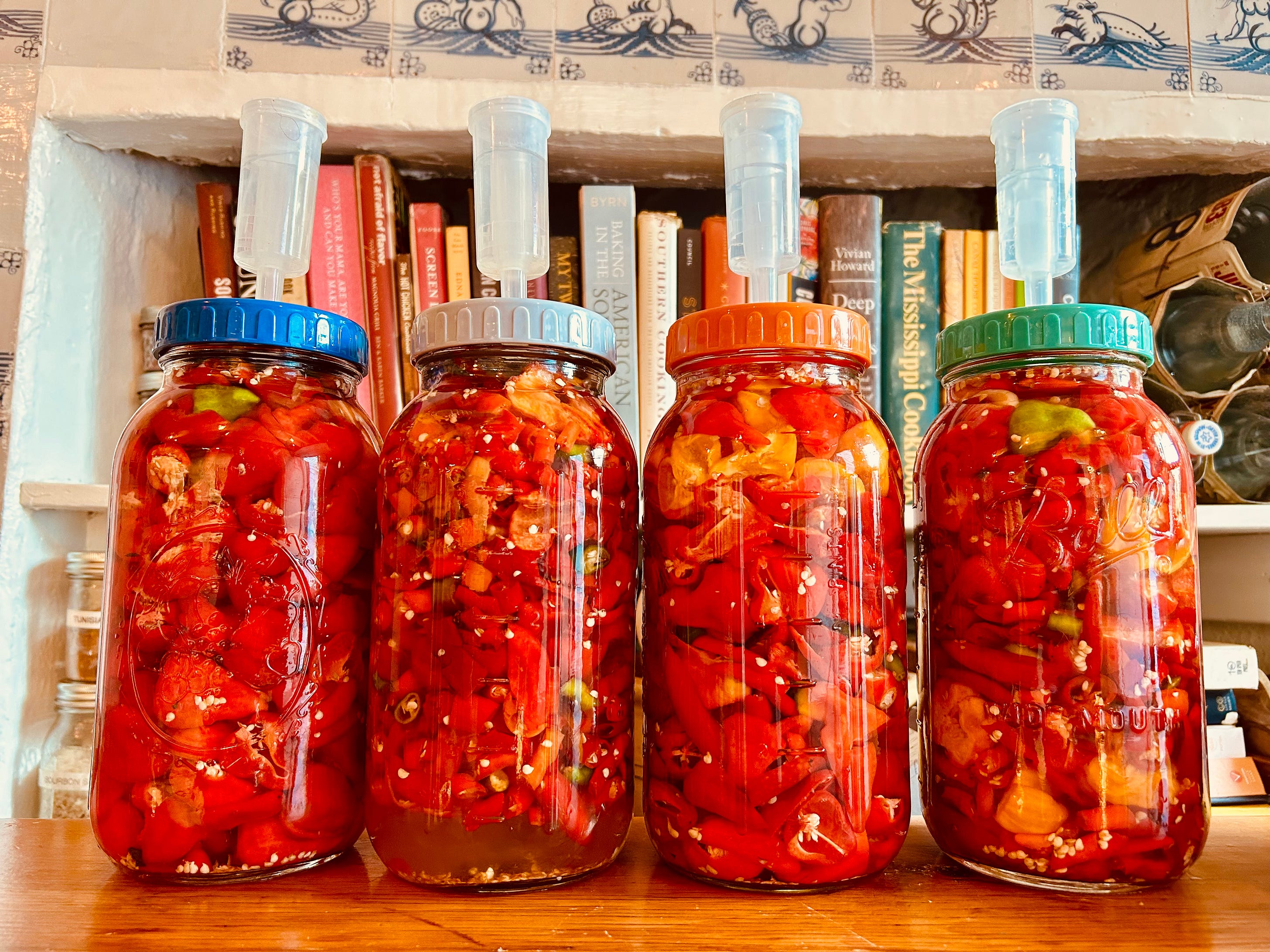
Then came Sunday, and I felt a little better—good enough to get up for a couple of hours and spend some time in the sun. My mom was visiting, and my friends Cat, Jonny, and Liz came over to pick peppers from our garden and make homemade hot sauce. It was a perfect early autumn day, with all three dogs snuffling around outside the fence of the vegetable patch. (Outside because Sunshine seems not to understand that peppers are not a suitable snack for a pup.) Afterward, everyone got to chopping the peppers and jarring them for fermentation. By the end, I was so tired that I didn’t make it to dinner—I went to bed hours before everyone else—but I was sated by the good hours I’d spent.
Earlier this summer, days after I learned I was going back on chemo, I was drinking coffee on the porch with my dad. He said that somehow he felt there would be a miracle—that someday all this would be behind me and I would be well. I understood the impulse, especially for a parent. And would I like a miracle cure? Sure. But I can’t anchor my sense of well-being in some future unknown, be it a miracle or something else. It doesn’t bring me comfort to hope for something that’s so far out of my control. I need to stay within what I can control, and what’s in my control is how I feel right now, how I live my life right now. And my life right now is good. It’s good despite illness. It’s maybe even good because of it—because of how it has clarified what I value and rerouted my priorities.
I’ve been thinking recently that the people I admire most are not those who bend reality to their will, but who accept it and find creative ways to engage with it. I think that’s my definition of resilience: to accept what’s happening moment to moment, and to allow for necessary adjustments, to pivot, to find relief, to cultivate small joys. And in that same vein, I try to plant seeds for future joys, for things to look forward to—like next weekend, when our tabasco peppers will be ripe for the picking.
With that, I’ll turn to today’s essay and prompt, called “The Wisdom of No Escape” by the inspiring Laura McKowen. It’s a powerful meditation on what happens when we stop running from discomfort, when we summon the courage to stay present—to welcome whatever the day, the hour, the moment will bring.
Sending hot, hot, very spicy love,
Suleika
Friday, 13 September 2024
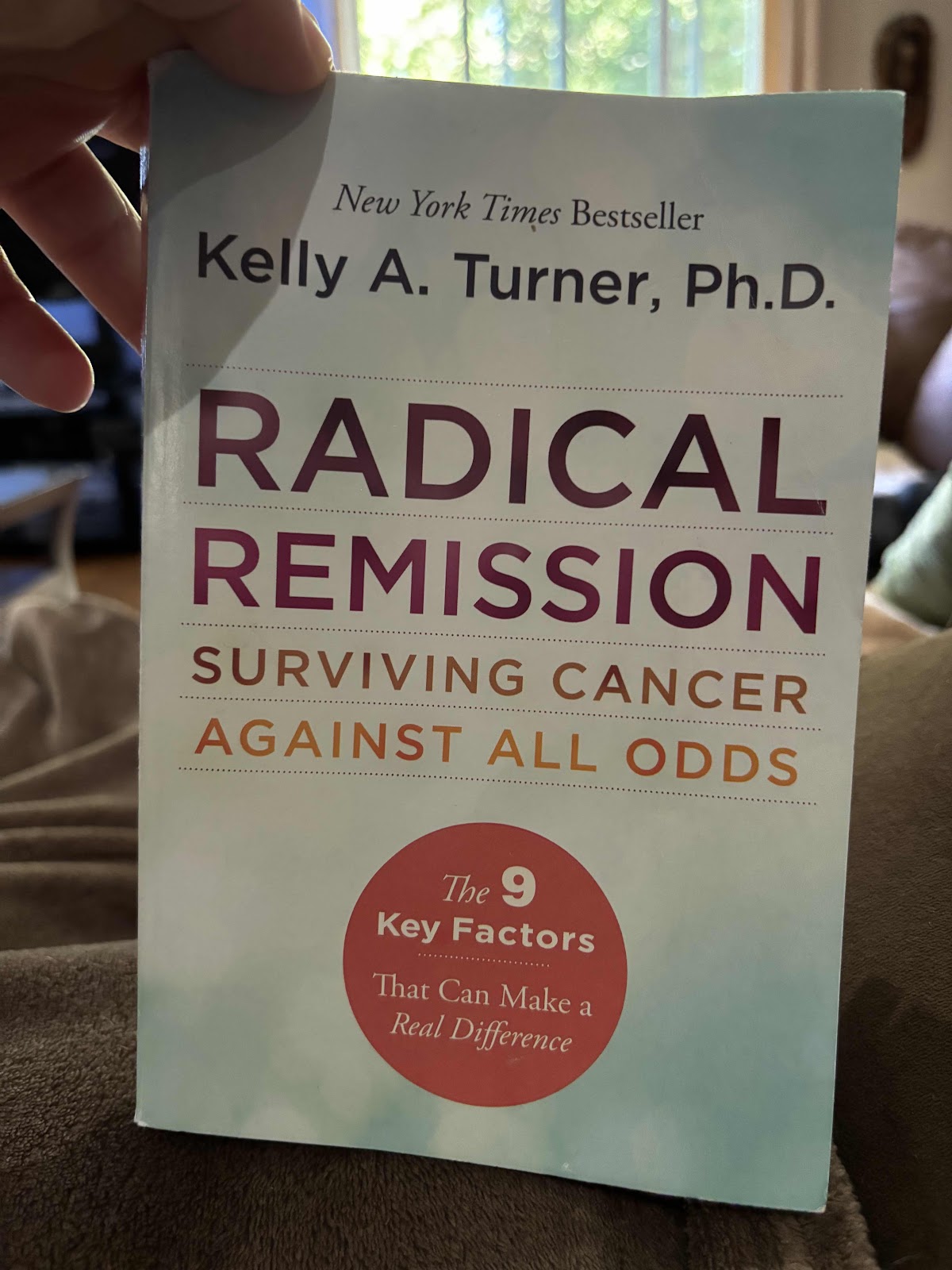
Radical Remission - surviving cancer against all odds
I've been reading this book Radical Remission over the past several weeks and I wanted to share some of the insights from it as I think it makes alot of sense.
The book talks about 9 key factors that can make a real difference for those of us with cancer.
1) radically changing your diet
this is really around the eat to live philosophy that i've read about before and partly why i changed my diet to alot of plant based foods during my first diagnosis. there's definitely ways to be more strict - eg: no sugar at all, zero alcohol - things to consider going forward. Also really restricting any processed foods and focusing on whole foods in your diet.
2) taking control of your health
this talked about more than just physical health - of course exercise is key, however healing also could including things like going to a naturopath doctor, going to a psychotherapist, going to an energy healer, even things like massage and acupuncture. mental, emotional and spiritual health is important too.
3) following your intuition
this was interesting - it was about quieting your mind through things like medication and guided imagery and then charting a course for yourself to heal based on your intuition. journalling can help too. it's about discovering what will help you heal from a holistic perspective. it could be something like a gratitude practice that you begin. or it could be other concrete actions too. it talked about how cancer is built up or blocked energy, that can be released.
4) using herbs and supplements
this section spoke about various herbs and supplements people have taken to help heal their cancer. something as simple as a probiotic to anti fungals and liver detoxifiers (eg: garlic, oil of oregano) and also immune system boosters - 12, vitamin C and D, tumeric, Green Tea etc. I could see the guidance of a naturopath being helpful here. Or - even pursuing chinese herbs/medicine.
5) releasing suppressed emotions
the next few sections I found super interesting! this section talked about how releasing stress actually builds your immune system. the key is to find a place a peace. at peace with dying and at peace with living. not an easy task but if you bring your body into neutrality it can be in rest and repair mode. so I need to let go of fear and uncertainty, and stay peacefully centred in the present moment - then my body has the ability to heal.
journalling can release emotions! you can even write something out and burn it (more on that later :))
also practice daily forgiveness of myself and others.
therapy is also very beneficial here :)
6) increasing positive emotions
this is pretty self explanatory but some ideas to do this were:
start and end day with gratitude!
find ways to smile and laugh each day - boost your immune system with comedy! and also surround yourself with people that energize you
also get active - get out in nature, dance, do meditation, call a friend
7) embracing social support
thing like wellspring, support groups, and ways to connect with others are so important and helpful for healing! i'm doing the healing journey class with wellspring right now and it's awesome.
8) deepening your spiritual connection
this section went into things like deep breathing, walking outside in nature, doing guided meditation and following guided imagery practices, as well as looking at things like daily prayer and spiritual groups.
9) having strong reasons for living
i loved this section. there are a few exercises suggested that I will do.
Write down how many years you want to live
Write down your ideal obituary of how you want to be remembered and what you have accomplished
Make a list of all your current reasons for living and enjoying life!
Think about what you'd change in your life - and make your remaining time on this planet as enjoyable as possible. - eg: career, relationships, hobbies, spirit
Have strong dreams and a desire to be well.
Think about what you'd regret not doing if you have 2 years to live?
Why do you want to stay alive?
What activities bring you energy and joy?
Great thought provoking questions that I will be journalling about :)
Some other quotes/insights:
be grateful for every day and do what you can to make a lot of good days happen!!!
What I am taking away from this is there is much more than just traditional treatment for cancer that can help you heal. Lots to think about and put into practice here for total healing.
Thursday, 12 September 2024
The forgotten patient
I’m feeling frustrated today with my care at mount sinai and this is unusual as I’ve always felt I’m in the best hands.
It was suggested I do a more fulsome genetics panel this time as last time I was only tested for brca1 and 2. It was initiated in July and was supposed to take 2-3 weeks. I followed up last week to ask about it and it turns out the lab didn’t do it. I’m frustrated that as the patient I’m the one tracking this as it could inform my treatment plan - eg more surgery. Where are my two oncologists and the genetics contact??
it’s now been expedited but it certainly makes my care feel less personal. Like I’m a number and not a h human with a life to get back to.
I want to know my full treatment plan!!
Monday, 9 September 2024
It’s a marathon!
I’ve had a few people acknowledge that they didn’t realize how long treatment takes and they are surprised at how long even chemo goes on for.
It’s not something I forgot that’s for sure. I know this part would be tedious, tenuous and drawn out. It’s a hard place to sit in sometimes.
This is where the patience really comes into play. as well as the emotional and mental resilience in addition to trying to survive the physical blows of chemo.
To some extend life is on hold and that part is certainly frustrating.
I have fomo for some things for sure.
But I also want to be careful in my activities as it can wear me out, or I can be more susceptible to illness which I really don’t want. As much as I hate chemo, I want to keep this train going and not derail the schedule.
So the priority remains trying to stay as healthy as I can and rebound safely and well after each session.
Fingers crossed for 4 more successful rounds.
Sunday, 8 September 2024
33 percent done chemo
I had my second chemo on August 29th - 33 percent done!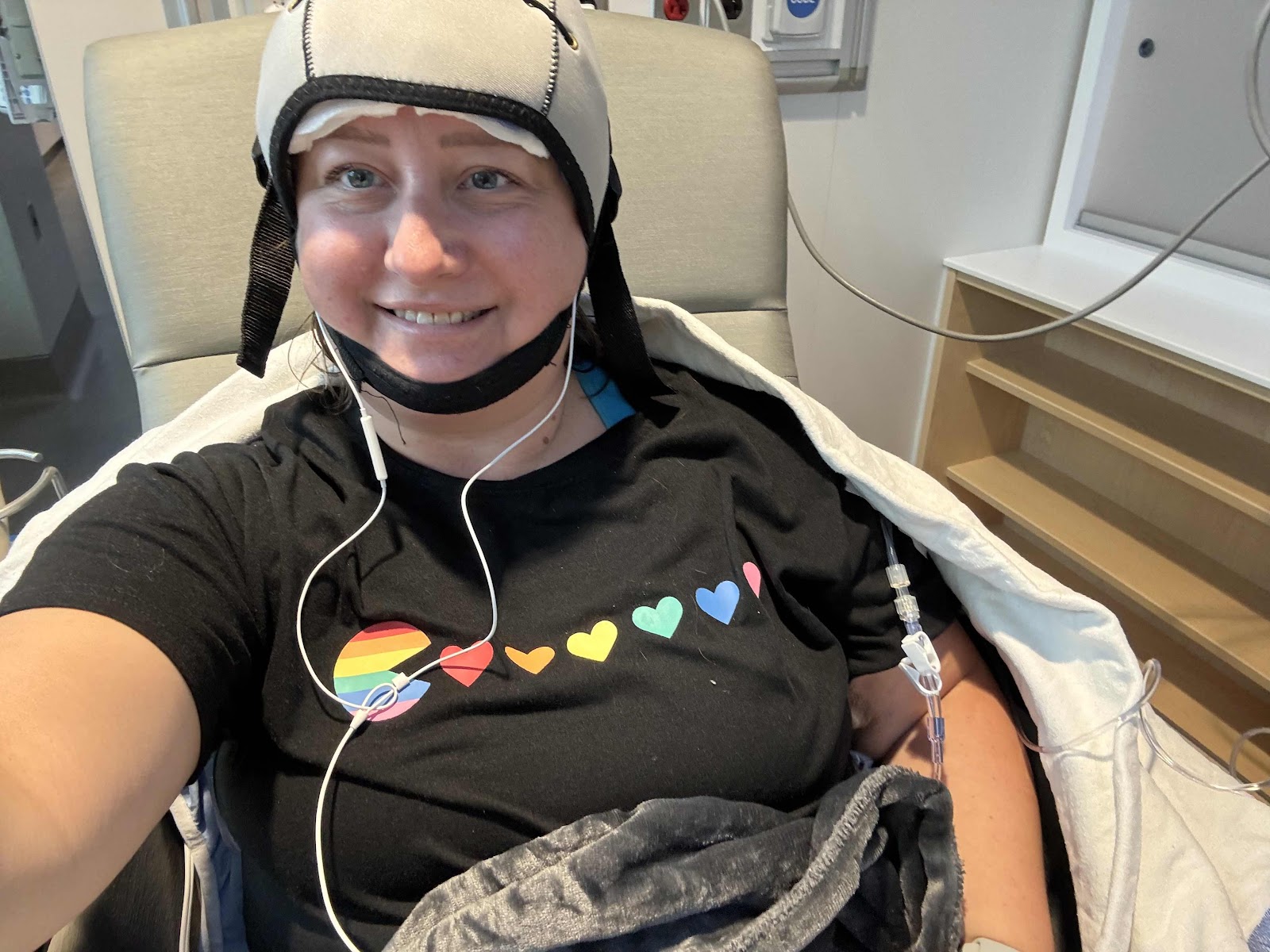
For this second round I used an electric blanket that Marie and Erin got me and it made a huge difference!!
Side effects were very similar to round one but I am going to flag some concerns because I feel the peripheral neuropathy quite a bit in my feet still. If they are willing to lower the dose I may ask.
The Lapelga white blood cell shot also still sucked. I may see about changing to Neulasta which I had in 2016.
My hair is really shedding quite a bit :(
It’s hard to watch but I want to stick this cold cap process out as at the very least my follicles are being protected for faster regrowth after this is over.
Hats are my friend right now.
I’ve been getting some hot flashes this round too so I guess I’m in chemo induced menopause - fun fun!
For this second round I used an electric blanket that Marie and Erin got me and it made a huge difference!!
So cozy.
On Sept 19 I will do chemo 3.
Subscribe to:
Posts (Atom)